
How Youth Athletes Can Prevent Overuse Injuries and Stay Healthy All Season Long
Here at Bull Dawg, we work with youth athletes from rec leagues through elite travel programs, and we know that one of the biggest keys to athletic development is consistency in training.
But sometimes, when training demands exceed the body’s ability to recover, athletes become prone to injury.
Overuse injuries are some of the most common injuries we see here in youth athletes. Unlike an injury caused by a single event, like a collision or awkward landing, overuse injuries develop gradually from repetitive stress on muscles, tendons, joints, and bones.
The good news? Many overuse injuries can be prevented with the right approach to training and recovery
What Are Overuse Injuries?
Overuse injuries occur when your body experiences repeated stress without enough time to recover and adapt. Young athletes are especially susceptible because their bodies are still growing and changing, we see it all of the time.
Common examples of overuse injuries that we treat at Bull Dawg include:
Runner’s knee
Shin splints
Stress fractures
Tennis elbow
Shoulder injuries in throwing athletes
Jumper’s knee
Tendon irritation
These injuries often start as small aches or discomfort that athletes may try to ignore. However, continuing to push through pain can allow a minor issue to become a bigger problem.
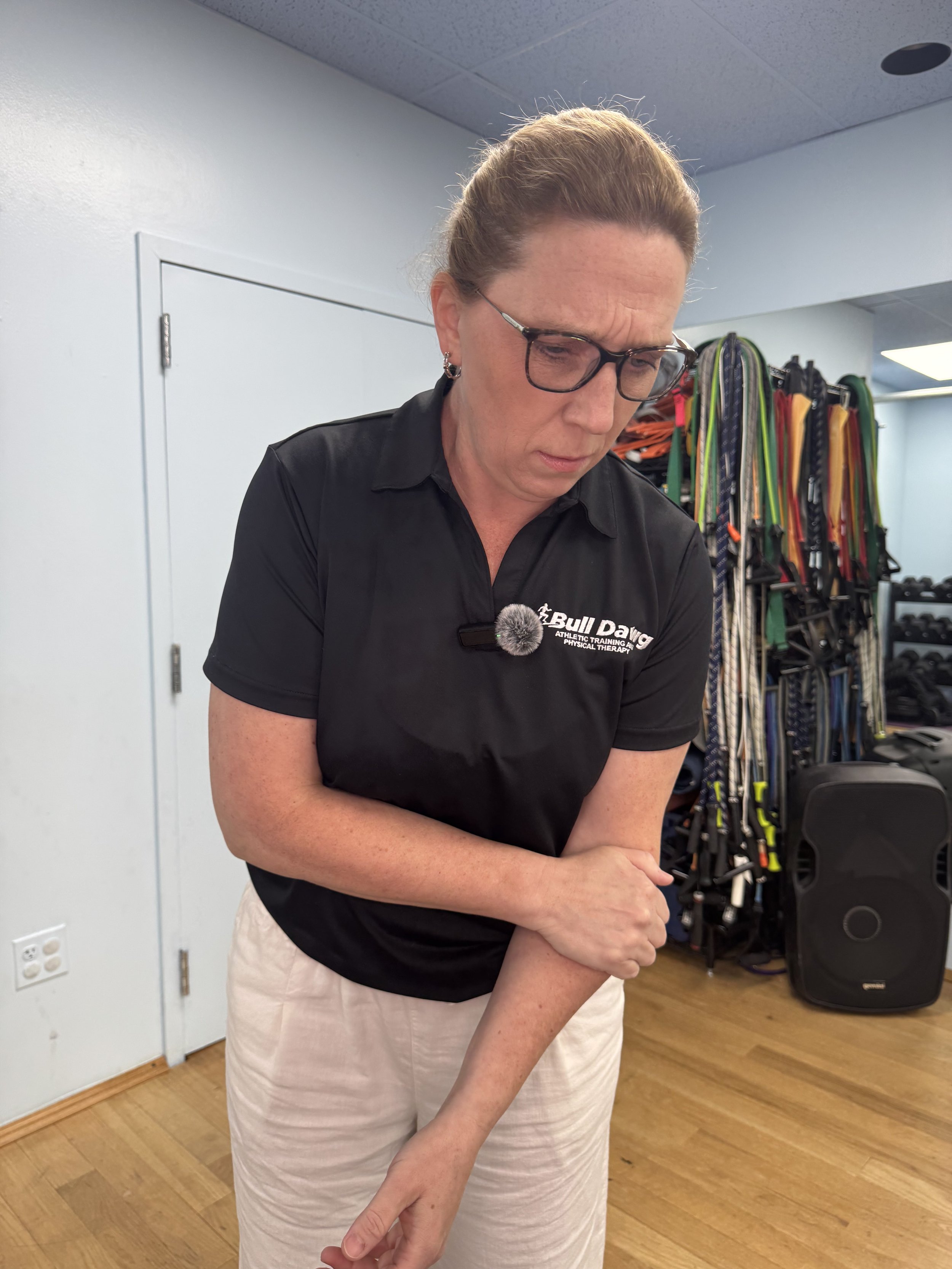
Warning Signs Your Youth Athlete Has an Overuse Injury
Not all soreness is automatically a problem, but attention is always needed when symptoms continue, or when performance is impacted.
Warning signs include:
Pain that gets worse during activity
Pain that does not improve with rest
Decreased performance
Changes in movement or technique
Avoiding certain activities because of discomfort
Pain that affects daily activities
A common misconception is that pain is just part of being an athlete. Ongoing pain is your body’s way of signaling that something needs attention. If your athlete is showing any of these warning signs, they should be evaluated by a medical provider.
What Youth Athletes Can Do to Prevent Overuse Injuries
At Bull Dawg, we emphasize building strength and allowing time for recovery as imperative to preventing overuse injuries. Youth athletes need to be paying attention to how their body responds to training, and learn to communicate with their coaches, trainers, and parents when pain or discomfort occurs.
Additionally, youth athletes can prepare for their sports season with pre-season conditioning. Our athletic trainers work with youth athletes across many sports, including lacrosse, baseball, running, rowing, basketball, and volleyball to help them prepare for their season and gain strength so they reduce injury risk.
During their sports season, youth athletes can benefit from physical therapy modalities to stay strong, mobile, and prevent injuries. Athletes need to know that just as important as practice is what happens between practices. Prioritizing sleep, nutrition, hydration, and recovery allows your body to rebuild and adapt.
How We Use Prevention Methods
We work with many athletes and use physical therapy to improve performance and reduce injury risk.
Athletes can receive support with:
Movement assessments
Strength development
Injury prevention programs
Return to sport guidance
Sport-specific training
The ultimate goal is to help athletes move better, perform better, and stay healthy throughout their season.
Keeping Your Athlete Healthy All Season
If your youth athlete wants to improve in their sport, the best course of action is to stay healthy so they won’t need to sit out during their season. Staying healthy allows athletes to continue practicing, competing, and improving.
By focusing on strength, recovery, proper training habits, and early intervention, athletes can reduce their risk of overuse injuries and stay ready for the moments that matter.
If your athlete is dealing with ongoing pain or you want to create a stronger injury prevention plan, Bull Dawg is here to help.